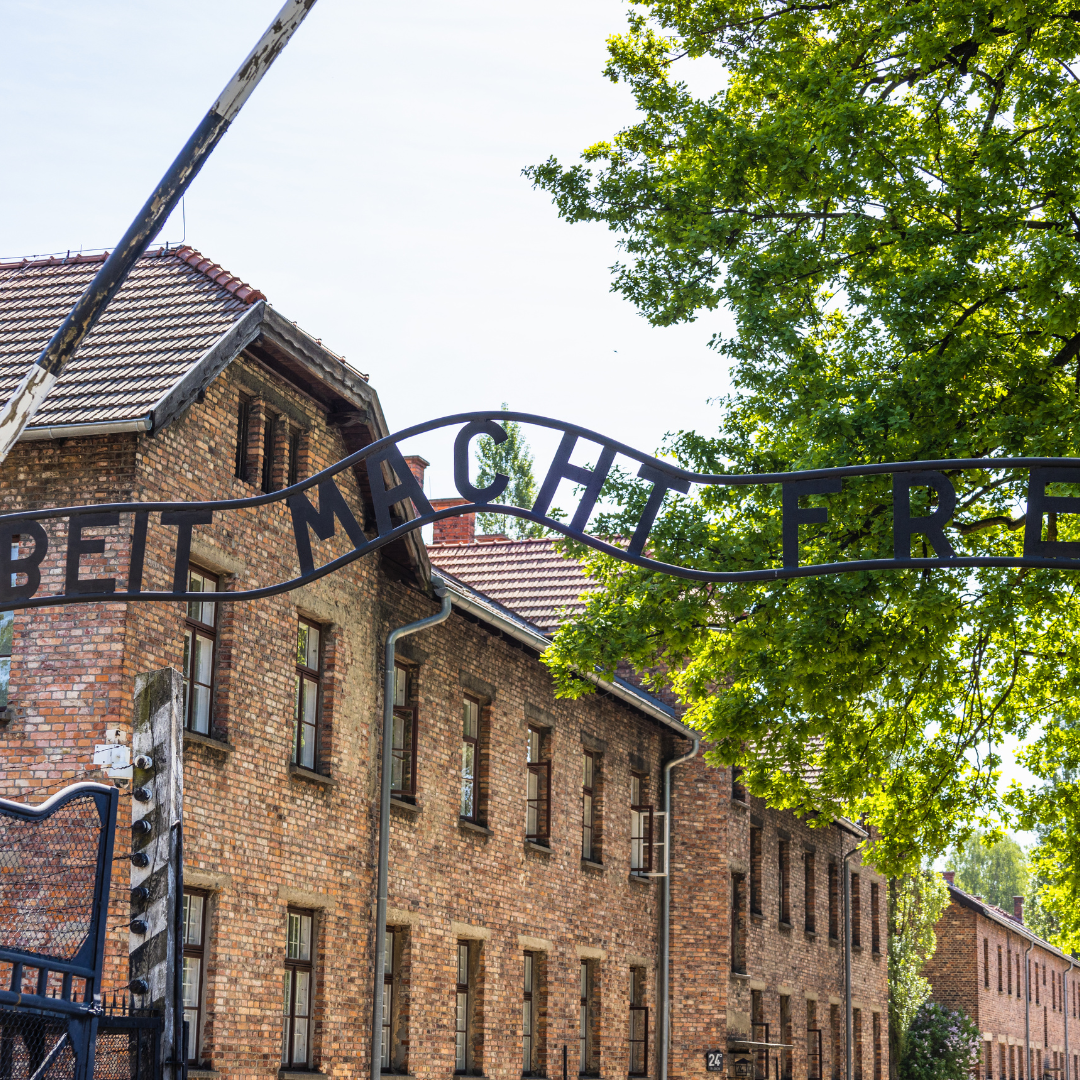
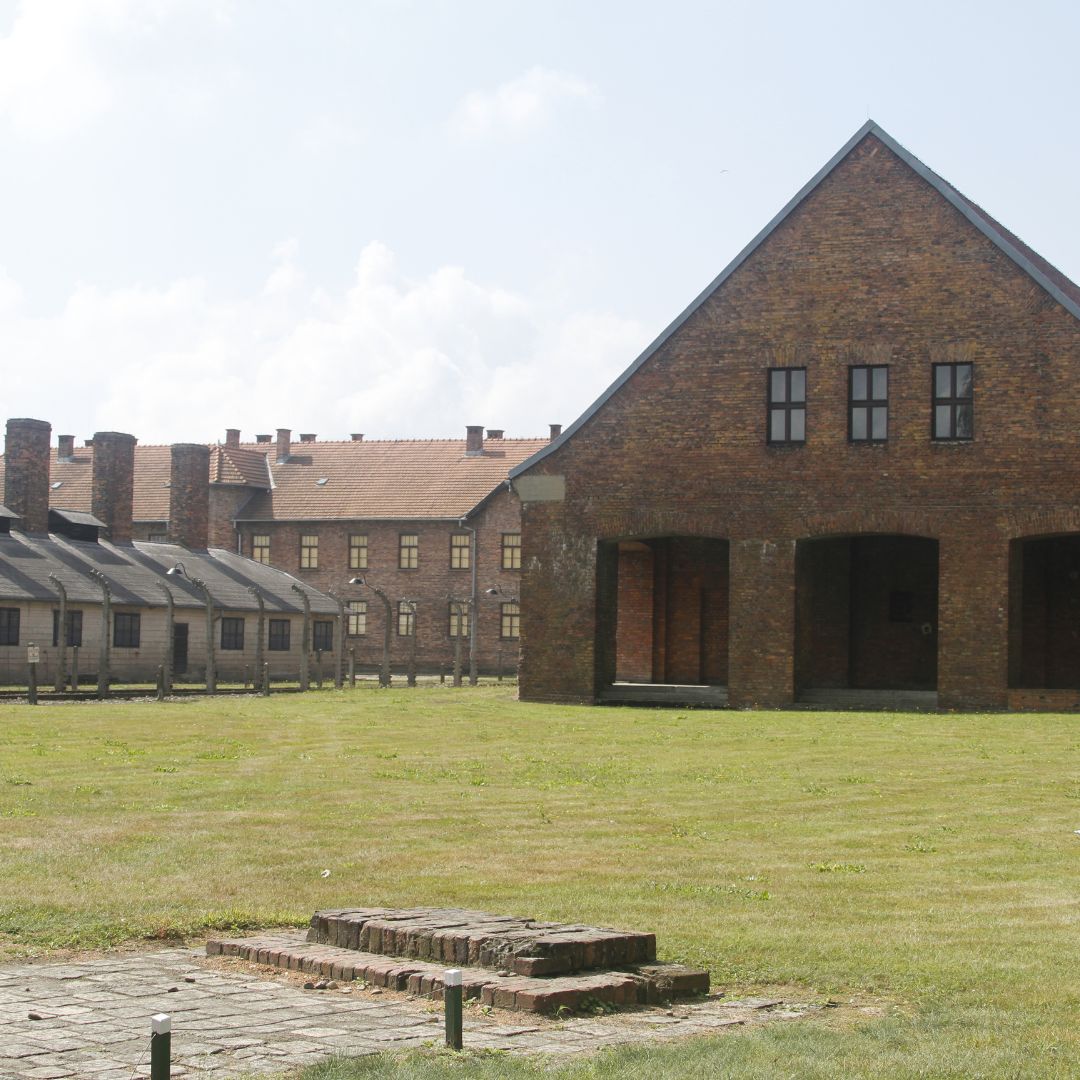
Auschwitz, the largest Nazi concentration camp during World War II, stood as a harrowing symbol of terror, genocide, and the Holocaust in Poland. Between 1940 and 1945, over 1 million people lost their lives within its confines. Originally a prison for Poles resisting Nazi occupation, Auschwitz evolved into a key component of Hitler’s „Final Solution” to exterminate Jews and others deemed undesirable by the Nazis. Jews from across Europe, political dissidents, homosexuals, Roma (Gypsies), and Soviet POWs were among those imprisoned in Auschwitz. The inmates endured severe conditions, including forced labor, starvation, overcrowding, physical abuse, and non-consensual medical experiments. Many perished due to these brutalities, while others faced death in gas chambers or by execution. Today, Auschwitz stands as a memorial to the victims of WWII, serving as a stark reminder of humanity’s capacity for evil. It urges us to confront hate and prejudice to prevent the recurrence of such atrocities in our society.
Birkenau Birkenau, an infamous part of the Auschwitz complex, served as a concentration and extermination camp during World War II. Located in Poland, it became a symbol of Nazi cruelty. Initially constructed in 1941 with 30 wooden barracks, Birkenau’s capacity surged to over 100,000 by 1944. Gas chambers were added for more efficient mass killings, while SS officers, stationed in numerous guard towers, ruthlessly oversaw inmates day and night, using dogs and firearms to enforce discipline. The horrors of Birkenau are seared into historical memory through survivor accounts and Allied forces’ photographs upon liberation in 1945. This place not only stands testament to the depths of human depravity but also bears witness to the resilience of the human spirit. Despite the trauma experienced within its confines, many survivors went on to lead successful lives, offering a glimmer of hope amid the darkness of this tragic chapter in history.
 Aushwitz museum